Subtitle maker

Create subtitles and text automatically with AI in 3 minutes

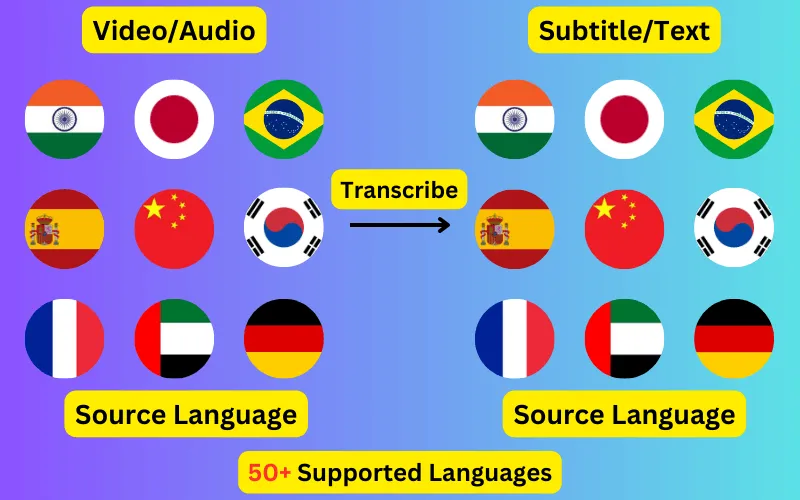
  • Transcribe audio/video to subtitles or text.
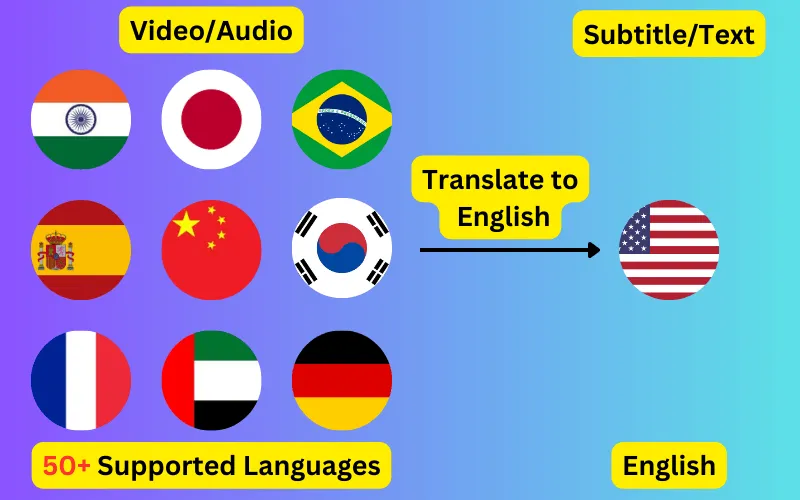
  • Translate audio/video into subtitles or text in any language.
  • 76 languages supported.
  • Save output as subtitles or plain text.
Trusted by 3000+ users.

Free: one 60-second file a day

Sign up for 3 a day

Mode:

Transcribe
Translate

Make a complete subtitle track for any video without typing it out or setting timings by hand. Upload, review the generated text, adjust anything that needs it, and export.

Making subtitles by hand, and why nobody does it twice

Subtitling manually means transcribing the audio, splitting it into readable blocks, and setting a start and end time for each one. For a ten-minute video that is a few hours of work, and the timing pass is the part that takes longest and ages worst — a single inserted line can push everything after it out of sync.

Automatic generation inverts the job. The transcription and the timings arrive already done, and your time goes into reviewing rather than producing. For most recordings that turns hours into a few minutes of reading.


What makes subtitles readable

Generated blocks follow these conventions by default, and the editor lets you merge or split anything that reads awkwardly for your particular material.

  • Two lines maximum per block, so the text never covers the picture.
  • Break at clause boundaries rather than mid-phrase — a subtitle that splits a noun from its verb is measurably harder to read.
  • Leave a block on screen long enough to read comfortably; roughly a second minimum, longer for denser text.
  • Keep speaker changes in separate blocks rather than combining them.

Subtitles in another language

Any recording can be turned into subtitles in any of the 76 supported languages, in either direction. The most common use is making an English subtitle track for a video in another language so it reaches a wider audience, but every pair works — the translation runs on the transcript and inherits its timings, so the subtitle appears exactly when the line was spoken.

Formats and where they go

Export as SRT for video platforms and editing software, VTT for web players, or TXT when you want a plain transcript with no timings for show notes or documentation. All three are produced from the same job.

ByteDance logoBerkley university logoUniversity of Illinois logoAljazeera logo
Transcribe 76 languages to Subtitles or Plain Text

Transcribe

Transcribe Your Video/Audio to Subtitles Automatically.

76 Languages supported (See List)

Translate

Translate Video/Audio into Subtitles in Any Supported Language, Automatically.

76 Supported Languages (See List)

Translate 76 languages to Subtitles or Plain Text

Supports Noisy Audio

Translate or transcribe audios recorded in a noisy environment with great accuracy.

Multilingual audio

Have video where multiple speak different languages? No problem!

Support for Diverse Accents

Different people from different places speak the same language differently, our AI can work through it seamlessly.

Common questions

How long does it take to make subtitles for a video?

Processing usually finishes in under three minutes regardless of the length of the recording, because long files are segmented and transcribed in parallel. Your own review time depends on how much you want to correct.

Can I change the wording of the generated subtitles?

Yes. The full transcript is editable before export, including both the text and where each block starts and ends.

Do I need video editing software?

No. The output is a subtitle file you upload alongside your video on YouTube, Vimeo or a learning platform. If you want the subtitles burned permanently into the picture, you would do that in a video editor using the exported SRT.

Can I make subtitles from just an audio recording?

Yes. Audio files are supported directly, which is how most people subtitle podcasts and interviews before pairing them with video.